
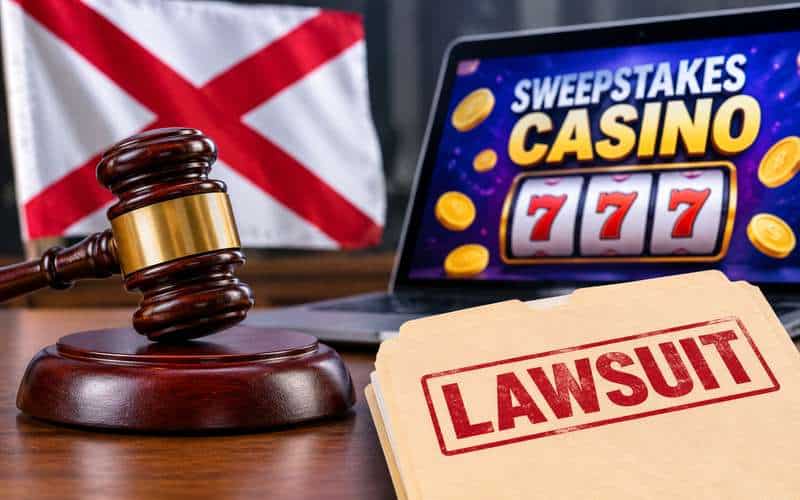
Alabama sweepstakes casinos are facing growing legal pressure as private lawsuits, political debate, and wider gambling enforcement put the business model under closer scrutiny. The state has not enacted a law specifically banning sweepstakes casino platforms, but operators and players still are an unsettled legal environment.
The issue has gained attention alongside Alabama’s broader gambling debate. A September 2026 report said VGW, the company behind Chumba Casino, invested $351,000 in Alabama political activity as lawmakers continued to weigh the future of gambling in the state.
Private Lawsuits Are Driving the Pressure
Unlike states that have adopted direct restrictions on sweepstakes casinos, Alabama’s current pressure centers largely on civil litigation. Alabama residents have filed lawsuits arguing that certain sweepstakes models amount to unlawful gambling and that players may be entitled to recover losses under an older state law.
Reporting on the litigation indicates that more than 40 cases had been filed since the beginning of 2025, including 21 additional lawsuits brought in January 2026. The claims have touched several major sweepstakes operators, including Stake.us, VGW, High 5 and WOW Vegas.
These cases matter because Alabama has not yet produced a definitive statewide ruling resolving whether the dual-currency sweepstakes model is legal. Their outcome could shape how operators structure promotions, handle Alabama customers, and respond to future claims.
Alabama’s Gambling Rules Remain Restrictive
Alabama’s legal framework continues to prohibit most forms of gambling and lotteries. Article IV, Section 65 of the Alabama Constitution bars lotteries and gift enterprises unless a constitutional change authorizes them, while Section 13A-12-20 of the Alabama Criminal Code addresses gambling involving something of value, a chance-based outcome, and a prize.
This approach directly affects sweepstakes casinos, since the platforms typically separate free promotional entries from paid virtual currency. Whether that structure avoids the legal definition of gambling is one of the central questions raised by opponents and litigants alike.
Alabama’s 2026 legislative session also included proposals with wider implications. Senate Bill 257 proposed a constitutional amendment covering a state lottery, in-person casino-style games, and in-person and online sports wagering, together with a commission to regulate gaming activities. The proposal did not establish a new legal framework for sweepstakes casinos.
Lottery and Casino Proposals Did Not Settle the Issue
House Bill 448 separately proposed an amendment authorizing an official state lottery under the supervision of a public lottery corporation. Its introduction showed that gambling remained an active political subject, even though the legislation did not directly answer whether sweepstakes platforms fit within existing Alabama law.
Both proposals stalled during the 2026 session, leaving the state’s position on sweepstakes casinos unresolved. That outcome preserved the status quo: no statute specifically bans the platforms, but neither creates a dedicated state licensing system or regulatory approval process.
The political debate will likely remain relevant, since licensed gaming interests have argued that sweepstakes platforms offer gambling-style products without paying comparable state gaming taxes or operating under equivalent oversight. Supporters of broader legalization, meanwhile, have continued to frame gambling as a potential source of public revenue and consumer regulation.
What the Legal Uncertainty Means for Players
Alabama players considering sweepstakes platforms face a changing environment, not a clearly settled rule. A site may remain accessible while lawsuits challenge the underlying model, and court decisions could affect the availability of promotional entries or redemption features even without a new statewide statute.
Offshore gambling remains a legal gray area, and readers should weigh Alabama law and the terms of any operator before participating.
For adults who use these platforms, the practical issues include understanding the difference between promotional and purchased currency, reviewing redemption conditions, and keeping gambling within a planned entertainment budget. Gambling responsibly matters, and anyone experiencing problem gambling can contact the National Council on Problem Gambling’s National Problem Gambling Helpline at 1-800-MY-RESET.
What’s Next for Alabama Sweepstakes Players
- Pending civil lawsuits may provide the clearest legal guidance on whether sweepstakes casino models satisfy Alabama’s definition of gambling.
- Future legislative sessions could revisit lottery, casino, and sports wagering proposals, although those measures would not automatically resolve the sweepstakes question.
- Operators may adjust Alabama-facing terms or promotional structures in response to court developments and broader industry pressure.
- Players can follow Alabama’s wider gambling debate through the state’s Alabama gambling laws guide and review operator terms before using any platform.